
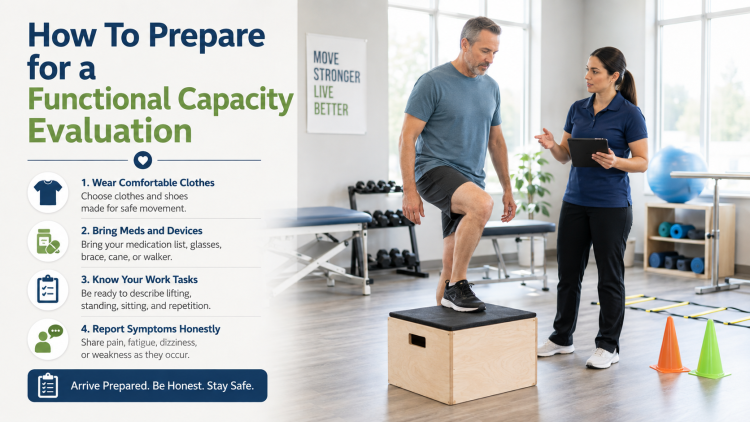
How To Prepare For A Functional Capacity Evaluation
A Functional Capacity Evaluation can feel unusually important before it has even begun. The result may help guide a return to work, work restrictions, a disability claim, rehabilitation planning, or a legal case. That leaves people wondering how to prepare for a Functional Capacity Evaluation and whether they should practice beforehand.
The best preparation is not learning how to “pass” the test. An FCE is intended to measure what you can safely and reliably do. Arriving with the right information, clothing, medication, and expectations helps the evaluator see an accurate picture of everyday function.
Confirm The Practical Details
Ask how long the evaluation is expected to last and whether it will take place in one session or more than one. Some evaluations take several hours. Others are more extensive because they must compare performance with detailed job demands or examine changes as fatigue develops.
Find out whether you should bring lunch, water, medical paperwork, or a job description. Confirm the location and arrival time. If activity commonly causes significant pain, fatigue, dizziness, or delayed symptoms, consider arranging transportation home.
Wear Clothes Made For Movement
Comfortable clothing allows the evaluator to observe lifting, reaching, walking, bending, carrying, sitting, and standing without a restrictive outfit getting in the way. Athletic shoes or another secure pair of closed shoes are usually more suitable than sandals, heels, or loose footwear.
Do not arrive in unfamiliar braces, shoes, or compression garments simply because you think they will improve your performance. Bring and use the equipment that is genuinely part of your normal routine, unless the evaluator has given different instructions.
Bring What You Normally Rely On
Take prescribed medication that you may need during the appointment, along with an accurate medication list. Bring glasses, hearing aids, a cane, walker, brace, or other assistive device you regularly use.
Do not stop medication in an attempt to make symptoms appear stronger, and do not take extra medication to push through the test. Follow your normal prescription unless the referring clinician or evaluator has specifically instructed you otherwise.
A written list of current symptoms can help when pain, fatigue, or memory problems make details difficult to recall under pressure.
Be Ready To Describe The Work
A diagnosis does not explain an entire workday. The evaluator may need to know how often you lift, how far you carry, how long you sit or stand, which positions are repeated, what pace is expected, and whether the job includes driving, climbing, reaching, keyboard work, or rapid decisions.
Think through a normal shift. What task becomes difficult first? Does accuracy decline before strength does? Can you complete an activity once but not repeat it throughout the day? Specific examples connect medical symptoms with real work demands.
Report Symptoms As They Change
During testing, speak up when pain, dizziness, weakness, numbness, shortness of breath, fatigue, or cognitive difficulty appears. Describe what changed and when. The evaluator is watching performance over time, not merely counting the heaviest object lifted.
There is no advantage in hiding a symptom until you can no longer continue. There is also no value in exaggerating. Consistent, plain reporting gives the evaluator better information about tolerance, safety, pace, and recovery.
Arrive As Your Usual Self
Try to get a normal night of sleep, eat as you ordinarily would, and stay reasonably hydrated unless you were given different medical instructions. Avoid an unusually demanding workout or day of heavy chores immediately beforehand.
An FCE is not a sporting trial. The useful result is the one that reflects your dependable capacity, including the effects of repetition and fatigue. Honest effort and clear communication matter far more than attempting to produce a perfect performance.
Discuss Your Functional Capacity Evaluation
MEASURAbilities has provided Functional Capacity Evaluation services since 1997 for individuals, physicians, attorneys, case managers, insurers, and vocational professionals. To discuss the purpose of an evaluation, the records needed, and the most appropriate testing approach, call Sandy Goldstein, PT, CDMS, at 480.285.6212.
Live References
Johns Hopkins Medicine: Functional Capacity Evaluations
American Physical Therapy Association: Functional Assessment of the Worker
MEASURAbilities: Functional Capacity Evaluation Services